What soft washing actually changes
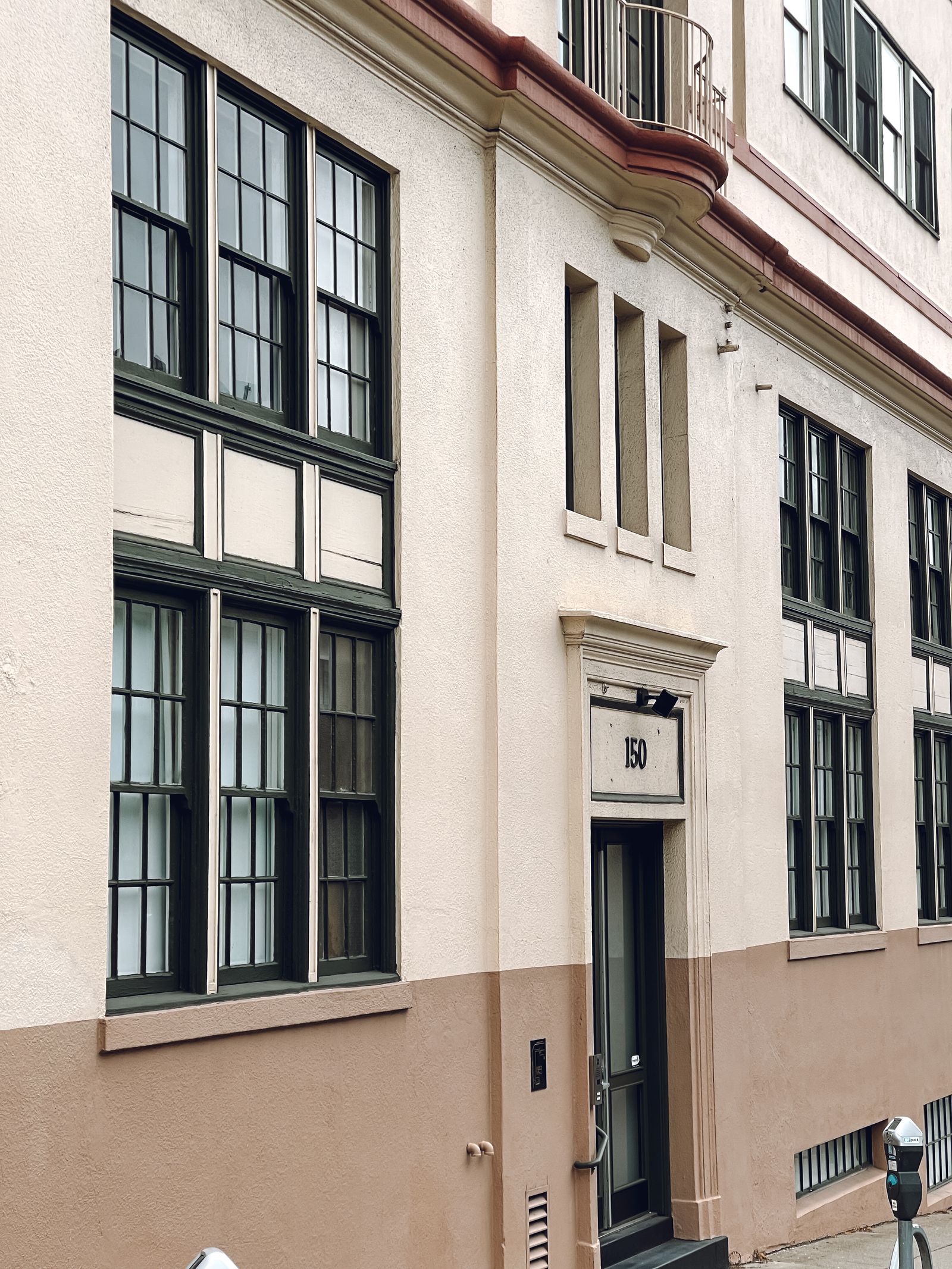
Soft washing is best understood as a process rather than a pressure number. A compatible solution may help loosen or treat organic growth, pollen film, light biological staining, bird residue, and accumulated atmospheric soil. Controlled dwell gives the chemistry time to work before a lower-pressure rinse removes the loosened material. The exact product, concentration, dwell, pressure, and rinse volume depend on the substrate, temperature, sun, wind, stain, nearby plants, and the finish the owner expects. On a commercial building, a useful scope separates masonry, glass, metal, painted surfaces, canopies, ledges, and roofline features instead of assuming one recipe belongs everywhere.
Soft washing is not a promise that every dark mark disappears. Rust, efflorescence, hard-water deposits, oxidation, tire film, soot, construction residue, etched glass, failed paint, and embedded grime may need contact tools or specialty treatment. Historic brick and limestone can be vulnerable to aggressive handling, while an aged coating or repaired patch may respond differently from the surrounding wall. A test area can reveal whether the proposed process is likely to meet the requested appearance. The quote should identify conditions that are expected to improve, conditions that need another method, and conditions that are outside cleaning altogether.
- Useful for compatible organic growth, pollen, biological staining, and atmospheric soil.
- Depends on material compatibility, chemistry, dwell, rinse control, weather, and water management.
- May need hand detail or specialty treatment for minerals, rust, oxidation, or construction residue.
- Does not substitute for masonry repair, envelope diagnosis, coating work, or leak correction.
Where controlled pressure may make sense
Pressure washing can be appropriate on selected durable, compatible surfaces when the operator can control distance, angle, nozzle, flow, runoff, and surrounding property. Ground-level concrete, certain site walls, robust service areas, and some hardscape conditions may respond well when the goal is to remove loose soil or traffic film. A lower pressure may still be selected even when a project is described as pressure washing. The important questions are what force reaches the surface, what the water carries away, and whether the finish, joints, edges, and adjacent assets can tolerate it.
More force is not automatically more cleaning. Excessive pressure can drive water behind trim, damage mortar, lift paint, scar soft masonry, etch concrete, break seals, damage screens, strip coatings, or create a visibly uneven pattern. On an occupied Cincinnati property, high-pressure spray can also increase overspray, noise, splash, and pedestrian disruption. Pressure should be one controlled variable in a documented method, not a marketing substitute for a material review. If a contractor cannot explain how the pressure and water path change by surface, the proposed scope is not yet specific enough.
Cincinnati materials and neighborhoods change the recommendation
Older central neighborhoods can include historic brick, soft mortar, limestone trim, decorative metal, painted details, recessed entries, and storefront glass beside newer repairs. A property in Over-the-Rhine or the Central Business District may need careful pedestrian and delivery coordination, while a riverfront hotel may place canopies and guest paths directly beneath the work. Clifton and Corryville may require attention to university or medical schedules. Mount Adams can complicate staging with steep grades and tight edges. Blue Ash, Sharonville, Norwood, and suburban business parks can offer a broader work area but still have parking, employee, loading, and landscaping constraints.
The lower wall may have salt, tire spray, trash residue, or irrigation film while the upper facade has pollen, rain patterns, organic staining, and bird residue. A sheltered courtyard can stay damp longer than a sun-exposed street face. River humidity, tree shade, spring pollen, summer storms, and winter freeze-thaw affect both the visible condition and the timing of work. The correct comparison is therefore not soft wash versus pressure wash for the entire building; it is the appropriate method for each surface and zone under the site's actual operating conditions.
Consider drone-assisted access as one part of a hybrid plan
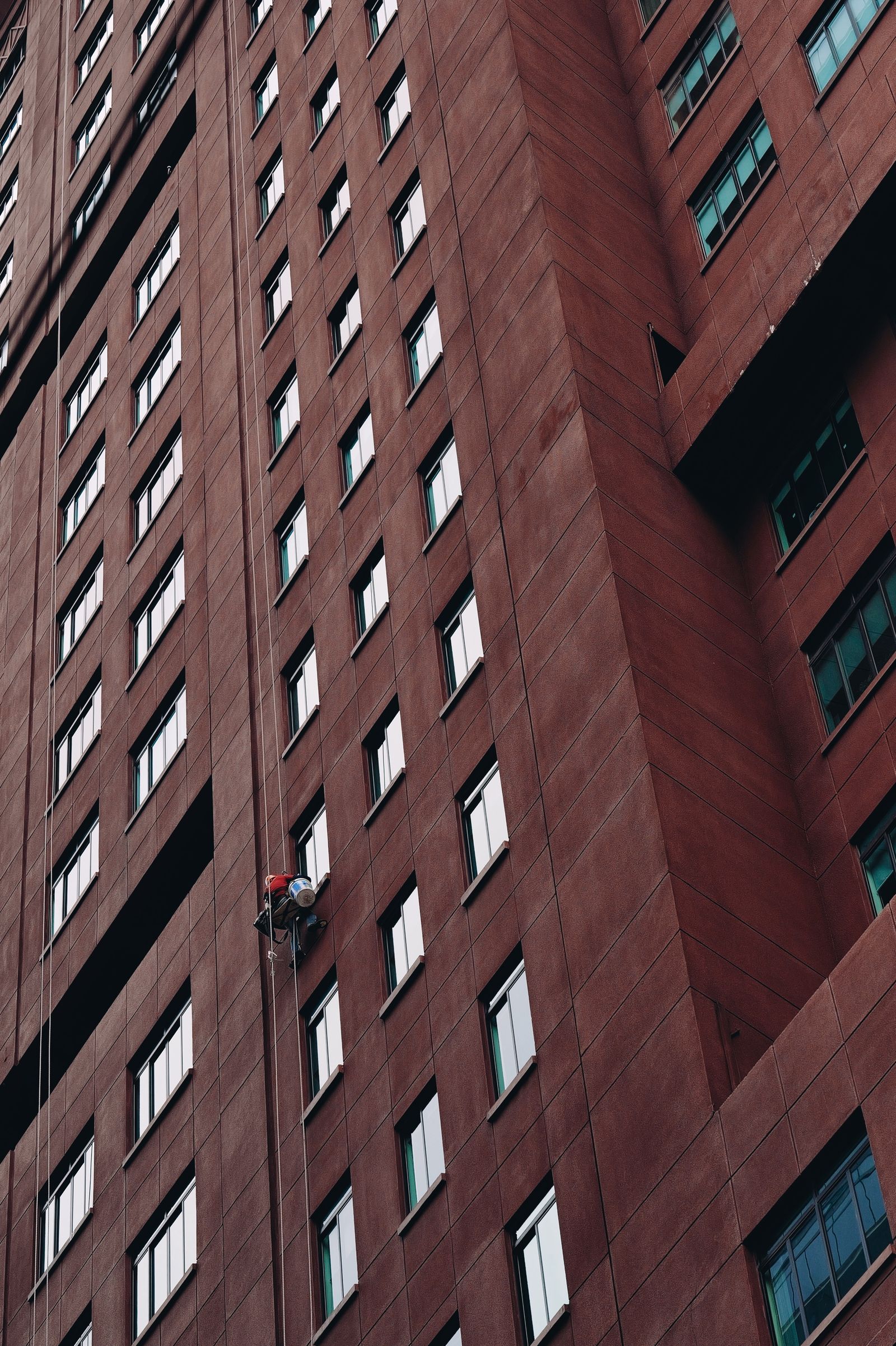
Drone-assisted application or rinsing may be considered for broad upper elevations when the building offers clear stand-off distance, a suitable launch area, visual line of sight, manageable wind, safe hose behavior, and a controlled ground zone. It may reduce some lift repositioning and help reach selected areas on compatible walls. It does not turn a difficult glass detail into a finished window-cleaning result, and it cannot safely solve every balcony, wire, tree, setback, canopy, or recessed architectural condition.
Cincinnati's bridges, utilities, hills, dense blocks, stadium activity, public events, adjacent structures, and changing river or storm winds can affect feasibility. Commercial drone work must follow applicable FAA requirements and any necessary airspace authorization. If the public zone cannot be managed or weather changes the spray path, the plan should shift to a lift, pole, roof-access method, hand detail, or reschedule. A credible quote states which elevations are candidates, what conditions must be present, what finish is expected, and where direct access remains necessary.
For many buildings, the strongest plan is hybrid: soft washing or controlled rinsing on broad compatible upper walls, contact detail at glass and entrances, careful pressure work on selected durable ground surfaces, and specialty referral for minerals, oxidation, failed joints, or repairs. This approach makes the method answerable to the building rather than forcing the whole property into one technique.
Weather and water management matter more than the label
Cincinnati weather can change the risk profile of either method. Direct summer sun may shorten dwell time and dry a solution unevenly. Thunderstorms bring lightning, gusts, heavy rain, visibility changes, and uncertain runoff. Winter and shoulder-season work can leave water on sidewalks, ramps, loading docks, and parking decks where freezing creates a hazard. Snowmelt, river humidity, spring pollen, and heavy leaf debris can change the appearance of a facade after the work date. The schedule should include pause conditions and a communication process rather than assuming the crew can continue through every forecast.
Water planning begins at the building, not the hose bib. Identify roof edges, gutters, downspouts, slopes, landscaped beds, catch basins, curb lines, low points, parking structures, public walks, and neighboring property. The City of Cincinnati and applicable authorities establish stormwater requirements that depend on the actual water, product, soil, and discharge route. A drain is not automatic permission to send wash water into it. The proposal should describe protection, diversion, collection, recovery, reduced rinse volume, or another appropriate control, and it should state what happens if the observed flow differs from the pre-job assumption.
- Set wind, lightning, rain, temperature, visibility, and freeze-related pause triggers.
- Map drains, slopes, landscaping, entrances, vehicles, equipment, and public paths.
- Coordinate the work with guest arrivals, tenants, deliveries, events, and accessible travel.
- Document finished zones, remaining stains, water controls, weather interruptions, and follow-up needs.
How Cincinnati property teams should compare quotes
Ask each contractor to map its recommended method to the actual zones: historic masonry, modern facade panels, glass, canopies, ledges, sign bands, loading walls, parking-facing areas, and entrances. Require the proposal to state the expected result, access method, chemistry or pressure assumptions, water source, drainage approach, protection plan, weather limits, occupied-site controls, exclusions, and closeout documentation. A lower price may represent a smaller scope, a different finish, no glass detail, no water management, or an assumption that a lift or site coordination will be provided by the owner.
Ask specifically what happens when a stain does not respond, when a damaged coating is discovered, when wind makes aerial work unsuitable, or when a public route cannot be closed. Request before-and-after photos by elevation, a list of completed and deferred areas, and recommendations for future maintenance. For a hotel, office portfolio, medical property, or mixed-use building, that record helps facilities staff compare future visits and decide whether the next step is a wash, rinse, contact detail, restoration, repair, or no work yet.
Request a Cincinnati recommendation based on the building, not the buzzword
When requesting a quote, send the address, wide photographs, close stain photographs, approximate height, materials, priority elevations, desired finish, operating restrictions, preferred dates, water access, drainage concerns, and any known repairs or leaks. Mention riverfront exposure, steep staging, historic details, public sidewalks, loading windows, outdoor seating, guest arrivals, or event dates when those conditions affect the job. The more clearly the property team describes the result, the more useful the method comparison becomes.
Drone Building Cleaners can help define whether soft washing, controlled pressure, drone assistance, direct access, or a hybrid sequence fits the site. The answer may be different for every elevation, and that is a strength rather than a complication. Tell us what you want the building to look like, which people must continue using it, and which zones matter first. We will identify the practical scope, note exclusions or specialty needs, and prepare a quote for a one-time reset or recurring commercial exterior care plan.